

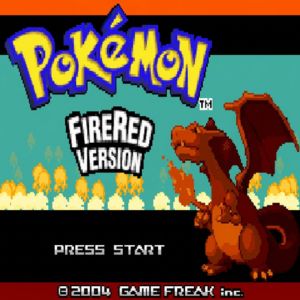
 pokemon fire red online
Loading game…
Play now

- Rating
- 7.3/10
- Published
- Technology
- HTML5
- Platforms
- desktop&mobile
Pokemon FireRed Online
Pokemon FireRed Online is a turn-based RPG where you begin in Pallet Town with one partner Pokémon and gradually open the entire Kanto region by catching new species, building a balanced team, defeating eight Gym Leaders, disrupting Team Rocket, and earning the right to challenge the Pokémon League. FireRed recreates the adventure of the original Pokémon Red with Game Boy Advance visuals and Generation III mechanics, while adding areas such as the Sevii Islands and extra progression after the first League victory.
The journey is easy to understand at the beginning.
Professor Oak gives you a choice between Bulbasaur, Charmander, and Squirtle.
From there, however, almost every major part of Kanto gives you another decision:
- Which Pokémon deserve one of your six party slots?
- Which moves should you keep?
- Do you train for the next Gym or explore another route first?
- Is a new catch filling a weakness or repeating something your team already does?
- Should you spend money on Poké Balls, healing items, or preparation for the next difficult area?
FireRed is not won by pressing the strongest attack every turn.
The longer the adventure continues, the more useful planning becomes.

Kanto Opens Up One Ability at a Time
The map may look large from the beginning, but you cannot reach everything immediately.
Badges, HMs, story events, and key items gradually open routes that were previously blocked.
A small tree may require Cut.
Water routes eventually require Surf.
Other locations remain inaccessible until you complete a story event somewhere else.
That means exploration works differently from a completely open-world game.
When you find something you cannot pass, remember it.
The game often gives you a reason to return later.
This is especially useful in Kanto because old routes can contain:
- optional items;
- new entrances;
- trainers you skipped;
- Pokémon you still want to catch;
- shortcuts that become useful later.
Progress is not just moving east or north.
It is learning how the region connects.
Your Starter Changes the Opening Hours
The first major choice is your partner Pokémon.
Bulbasaur
Bulbasaur’s Grass typing makes several early matchups easier, particularly against the first two Gyms.
That makes it a comfortable choice if you want a smoother beginning.
Squirtle
Squirtle provides reliable Water-type damage and starts with a useful matchup against Brock’s Rock-focused Gym.
It can grow into a durable member of the team rather than simply serving as an early-game solution.
Charmander
Charmander has a more difficult opening against Brock, but that does not make it a bad starter.
It simply means the rest of your early team matters more.
Catching Pokémon that cover Rock- and Water-type opponents makes the journey much easier than expecting Charmander to solve every fight alone.
The important lesson applies to all three starters:
your starter should become part of the team, not the entire team.
Build Roles, Not Just Six Favorite Pokémon
A party can hold six Pokémon.
Using six strong species does not automatically create a good team.
Look at what each member actually contributes.
A useful story team benefits from several different roles:
Reliable damage — Pokémon that can finish normal Trainer battles without wasting many resources.
Type coverage — moves that answer opponents your starter handles poorly.
Speed — useful when defeating a dangerous opponent before it can attack.
Durability — something that can safely stay in against harder enemies.
Status or support — moves that create advantages without relying only on raw damage.
Field utility — Pokémon that can help with useful HMs without ruining the move sets of your most important battlers.
You do not need to optimize the perfect competitive team.
You need enough different options that one bad matchup does not stop the whole journey.
The Eight Gyms Keep Exposing Different Weaknesses
Kanto’s Badge challenge moves through eight Gym Leaders:
- Brock — Rock
- Misty — Water
- Lt. Surge — Electric
- Erika — Grass
- Koga — Poison
- Sabrina — Psychic
- Blaine — Fire
- Giovanni — Ground
That sequence is one reason relying on one Pokémon becomes increasingly risky.
A team built specifically to destroy Misty may struggle against Lt. Surge.
Something useful against Erika may have a poor matchup later against Blaine.
Instead of constantly replacing your team, improve its coverage.
Before an important Gym, check:
Who can hit the Leader effectively?
Who can safely take their attacks?
What is my backup if the first counter faints?
That third question is often the difference between a balanced party and a team that depends on one overleveled Pokémon.
Team Rocket Interrupts the Badge Hunt
FireRed is not simply eight Gyms followed by the Pokémon League.
Team Rocket repeatedly appears during the journey.
Their operations take you through places such as Mt. Moon, the Rocket Game Corner hideout, Pokémon Tower, and Silph Co.
These sections change the rhythm of the adventure.
Sometimes reaching the next important destination requires solving a Team Rocket problem first.
Silph Co. is a good example.
It is not only a sequence of battles.
The building contains multiple floors, warp tiles, locked areas, items, and Trainers, so finding the correct route matters alongside winning fights.
Take time to explore these locations instead of rushing toward the boss.
Story areas often contain useful items that can help the team afterward.
Do Not Ignore Regular Trainers
Wild Pokémon are useful when you need a specific catch or a few extra levels.
Trainer battles usually give better progress through the normal adventure.
Fight Trainers along routes instead of constantly avoiding them.
The experience helps keep several party members usable, and the money supports:
- Poké Balls;
- healing items;
- status recovery;
- useful purchases in towns;
- preparation before longer routes.
Skipping too many Trainers can create a problem later when you suddenly reach a Gym with only one properly trained Pokémon.
A few battles while travelling are easier than a long grinding session immediately before a boss.
The VS Seeker Makes Training More Controlled
FireRed includes the VS Seeker, which allows eligible Trainers to be challenged again after it recharges.
That makes later training less dependent on random wild encounters.
If one Pokémon falls behind the rest of the party, rematches can help bring it back into useful range.
The VS Seeker is particularly valuable because repeated Trainer battles can provide both experience and money.
Use it when you have a clear reason to train.
You do not need every Pokémon at the exact same level.
The goal is simply to prevent most of the party from becoming unusable while one Pokémon does all the work.
Type Advantage Is Important, but Move Sets Matter Too
Catching a Pokémon of the right type does not automatically solve a matchup.
Check what moves it actually knows.
A Pokémon may have a favorable type but lack a strong attack that uses that advantage.
The opposite can also happen.
A Pokémon may learn coverage moves that help against types you would not normally expect it to handle.
When choosing a new move, ask:
Does this improve something the Pokémon can already do?
or
Does this give the team a new answer?
The second option is often more valuable.
Four attacks that all cover the same matchup leave very little flexibility.
FireRed Uses Generation III Battle Mechanics
Although FireRed recreates the original Kanto adventure, it does not simply copy Pokémon Red’s battle system.
It uses the mechanics of Generation III.
Abilities and Natures are part of the game.
Dark and Steel types already exist.
Moves and Pokémon have updated statistics and behavior compared with the original Game Boy versions.
This matters because an old strategy remembered from Pokémon Red may not work exactly the same way in FireRed.
Treat FireRed as a remake of the adventure, not a pixel-for-pixel mechanical copy.
Catching Pokémon Is About Improving the Team
The Pokédex encourages catching many species, but your active party still has only six spaces.
Do not add every new Pokémon immediately.
Ask whether the catch gives you something useful.
A new team member could provide:
- a type you lack;
- a resistance the team needs;
- better speed;
- status moves;
- stronger coverage;
- access to a useful evolution.
If it does not improve the current team, it can still be valuable for the Pokédex without replacing someone you already trained.
That distinction saves a lot of unnecessary grinding.
Keep Poké Balls Before Entering New Areas
Kanto regularly introduces new wild Pokémon as you reach different routes, caves, water areas, and special locations.
Running out of Poké Balls when you finally find something you want is avoidable.
Keep a reasonable supply before entering unfamiliar areas.
For difficult catches:
- Reduce the target’s HP without knocking it out.
- Use Sleep or Paralysis when available and safe.
- Avoid attacks that could unexpectedly finish the Pokémon.
- Then begin using Poké Balls.
Do not sacrifice an important rare encounter just to finish the battle faster.
HMs Are Progression Tools, Not Just Battle Moves
Moves such as Cut, Surf, Strength, and Fly affect exploration as well as combat.
They allow you to interact with Kanto in ways that normal attacks cannot.
The problem is that HM moves occupy move slots.
Think before putting several HMs onto one of your strongest battlers.
Some HM moves are useful enough in battle to justify the slot.
Others are mainly field tools.
Spreading utility intelligently can keep your main team’s battle move sets more flexible.
The Safari Zone Changes How Catching Works
Fuchsia City’s Safari Zone gives you access to Pokémon and items through a different catching system.
Normal team battles are not the focus there.
You have limited resources and must make decisions about how to approach wild Pokémon while exploring the area.
The Safari Zone is also important for progression and rewards exploration beyond simply catching another species.
Do not enter only to wander randomly.
Pay attention to paths, buildings, and items because reaching the correct areas matters.
Your Rival Measures the Team You Actually Built
Your rival appears repeatedly throughout the adventure.
These battles are useful because the rival’s team develops alongside your own journey.
A Gym specializes in one type.
Your rival usually presents a more varied group.
That makes rival battles a better test of overall team flexibility.
If your entire strategy depends on one favorable type matchup, a varied rival team can expose that weakness quickly.
Keep more than one dependable battler ready.
The Elite Four Requires More Than One Good Counter
After earning all eight Badges and reaching Indigo Plateau, you face the Elite Four and Champion.
Unlike a normal route, this is a sequence of major battles.
You cannot treat each one like an isolated Gym trip with unlimited preparation between fights.
Before entering:
- heal the entire team;
- bring recovery items;
- restore important PP;
- check that several team members are properly trained;
- make sure your moves cover more than one opponent type.
The Elite Four includes Lorelei, Bruno, Agatha, and Lance, followed by the final Champion battle.
A team that can defeat one of them easily but has no answer to the next member will still struggle.
Think about the entire sequence.
The Adventure Continues After Becoming Champion
One of the biggest differences between FireRed and the original Pokémon Red is what happens beyond the main League challenge.
The Sevii Islands expand the adventure with new locations, additional story events, more Pokémon, and further Team Rocket activity.
The first islands become accessible before the main story is completely finished, while later content opens as your progress continues.
After reaching the required milestones, the National Pokédex expands what the game allows you to collect and evolve.
That means defeating the Elite Four is a major goal, but it does not have to be the end of the save file.
The National Pokédex Gives Collection a Second Phase
After entering the Hall of Fame and meeting the required Pokédex conditions, Professor Oak can upgrade your Pokédex to National Mode.
That creates another layer of progression.
Pokémon from beyond the original Kanto selection become relevant, and further Sevii Islands exploration becomes more important.
Players who enjoy completing the Pokédex therefore have a much longer goal than simply defeating the Champion.
You can treat FireRed as two connected adventures:
First: build a Kanto team and become Champion.
Then: expand the Pokédex, explore more of the Sevii Islands, and complete additional post-game objectives.
FireRed and Ruby Feel Different Even Though Both Use Generation III
Pokemon FireRed and Pokemon Ruby run on the same generation of Pokémon mechanics, but their adventures are not interchangeable.
FireRed takes you through Kanto, follows the conflict with Team Rocket, uses the classic Kanto Gym journey, and later expands into the Sevii Islands.
Ruby takes place in Hoenn, focuses on Team Magma and Groudon, introduces its own regional Pokémon and environments, and puts much more emphasis on systems such as Double Battles and Pokémon Contests.
That makes FireRed a useful next game even if you have already played Pokémon Ruby.
You are learning a different region, facing different Gyms, catching a different regional selection, and following a different story.
Pokemon FireRed Browser Controls
FireRed was designed for the Game Boy Advance.
The original control layout uses:
D-Pad — Move through the world and menus
A — Confirm choices, interact, talk, select attacks
B — Cancel or go back
Start — Open game menus
Select — Secondary GBA input
L / R — Shoulder buttons and help functions
When you play Pokemon Fire Red online, the keyboard controls depend on the browser emulator being used.
Movement is commonly assigned to the Arrow Keys or WASD, while other keyboard buttons emulate the original GBA A, B, Start, Select, L, and R inputs.
Use the control panel shown by the version on Playnados rather than assuming every browser emulator uses the same keys.
Pokemon Fire Red Online and Unblocked Searches
Players may search for Pokemon Fire Red online, play Pokemon Fire Red online, Pokemon Fire Red Unblocked, Pokemon FireRed Unblocked, Pokemon Fire Red free, or Pokemon Fire Red online emulator when looking for the Game Boy Advance adventure in a browser.
These searches describe different ways players look for the same FireRed experience.
The underlying game remains a long-form Pokémon RPG.
You still need to explore Kanto, catch and train Pokémon, collect all eight Badges, confront Team Rocket, reach the Pokémon League, and continue into the Sevii Islands if you want to explore the additional content.
If your browser version supports normal saves or save states, save regularly. FireRed is far too long to treat like a short arcade game.
The word “unblocked” is a common search phrase. It does not mean the page can bypass restrictions applied by a school, workplace, managed device, firewall, or network administrator.
Pokemon FireRed FAQ
What is Pokemon FireRed?
Pokemon FireRed is a Game Boy Advance remake of the original Pokémon Red adventure. It returns to Kanto with updated Generation III mechanics, improved presentation, the original eight-Gym journey, Team Rocket, and additional Sevii Islands content.
Which starter Pokemon can you choose?
Professor Oak lets you choose Bulbasaur, Charmander, or Squirtle at the beginning of the game.
How many Gyms are in Pokemon FireRed?
Kanto has eight Gyms. Collecting all eight Badges allows you to progress toward the Pokémon League and challenge the Elite Four.
What are the Sevii Islands?
The Sevii Islands are an additional group of locations introduced in FireRed and LeafGreen. They contain extra exploration, Pokémon, story content, and important post-game progression beyond the original Kanto adventure.
Is Pokemon FireRed the same as Pokemon Ruby?
No. Both are Generation III Game Boy Advance RPGs, but FireRed takes place in Kanto and follows Team Rocket, while Ruby takes place in Hoenn and centers on Team Magma and Groudon.
Similar Games
Pokemon Ruby — Leave Kanto behind and start a different Generation III journey across Hoenn, where Treecko, Torchic, or Mudkip lead into new Gym battles, Team Magma’s plans, Double Battles, and the hunt for Groudon.
Pokemon X and Y Online — After exploring classic Kanto, try Pokemon X and Y Online for a newer-generation adventure through Kalos featuring Chespin, Fennekin, Froakie, Mega Evolution, Fairy-type battles, and Team Flare.
















Comments